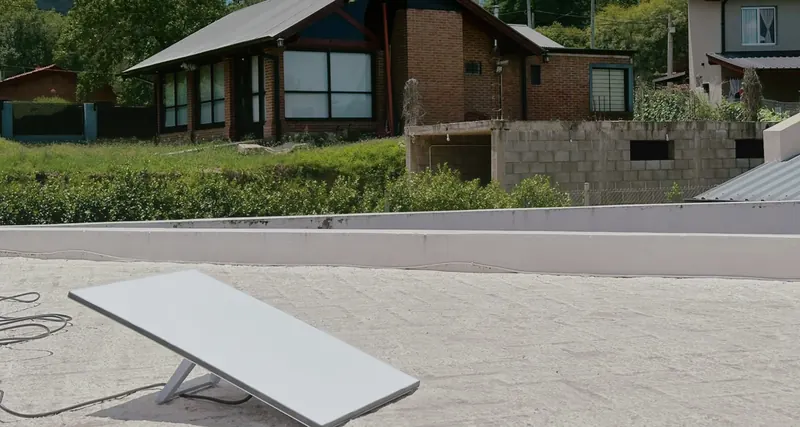
Starlink Residential plans compared: 100 Mbps, 200 Mbps and Max
This is my referral link. You order on Starlink.com at its normal price. First-time customers can currently get a $100 credit there, set by Starlink.
Starlink sells three Residential plans in the U.S.: Residential 100 Mbps, Residential 200 Mbps and Residential Max. They share the same satellites and the same unlimited data, and differ in top speed, network priority, Wi-Fi hardware and installation.
Below are the Starlink Residential plans side by side, with prices and speeds taken from Starlink's own pages and its federal broadband labels on November 27, 2026, then a short, honest look at Starlink Residential vs Roam. Current offers are on the Starlink Residential deals page.
Starlink Residential plans at a glance
| Residential 100 Mbps | Residential 200 Mbps | Residential Max | |
|---|---|---|---|
| Top download | Capped at 100 Mbps | Capped at 200 Mbps | Up to 400+ Mbps |
| Typical download (label) | 80–100 Mbps | 140–200 Mbps | 170–320 Mbps |
| Typical upload (label) | 15–35 Mbps | 15–35 Mbps | 20–40 Mbps |
| Typical latency, continental U.S. | 30–40 ms | 30–40 ms | 30–40 ms |
| Data | Unlimited, deprioritized | Unlimited, deprioritized | Unlimited, top Residential priority |
| Wi-Fi (Starlink's rating) | Good | Great | Best |
| Professional install | Optional, $99 at our sample addresses | Free | Free |
| Standard price, sample Montana address | $55/mo | $85/mo | $130/mo |
| Price range on Starlink's label | $44–$66/mo | $68–$102/mo | $104–$156/mo |
| Availability | Select areas | Select areas | No select-areas limit listed |
Sources: Starlink's Residential page, its "What are the Residential plans?" help article, and the broadband facts labels on its order page, Nov 27, 2026. The Montana prices are the standard prices implied by the order page at a Lewistown address; a Washington, DC address showed about 10% more. Taxes extra. Speeds are not guaranteed and are slower at busy times.
Current offer: through December 1, 2026 at 08:00 UTC, Starlink's Black Friday promotion halves the monthly service price for the first 6 months for new Residential customers, so the Montana prices above showed as $27.50, $42.50 and $65. Details and conditions are on the deals page.
Residential 100 Mbps: for a smaller household
Starlink describes the 100 Mbps plan as a more affordable option for 1 to 3 person households with basic needs: browsing, video calls and streaming. Downloads are capped at 100 Mbps, and its broadband label puts typical downloads at 80 to 100 Mbps. At our sample addresses it came with the newer Starlink V5 kit and a Router Mini, as a $0 upfront rental.
The trade-off is priority. Starlink says speeds on the 100 Mbps plan may be slower during peak hours than on Max, and its label lists the data as unlimited but deprioritized. For one or two people who mostly stream and browse, that is often fine. For a house where three people are on video calls at 7 PM, it is the first place to feel strain.
Residential 200 Mbps: the middle plan
The 200 Mbps plan caps downloads at 200 Mbps, with typical downloads of 140 to 200 Mbps on Starlink's label. Starlink pitches it at busy homes and 4K streaming, rates its Wi-Fi as "Great", and lists free professional home installation. At the Washington, DC address the order page listed a Starlink V4 Standard kit with a Router 4.
Like the 100 Mbps plan, it is only offered in select areas and its data is deprioritized against Max at busy times. If it appears at your address, it is the plan most households should look at first: noticeably more headroom than 100 Mbps for a moderate price step.
Residential Max: the priority plan
Max is Starlink's best-performing home plan: speeds up to 400+ Mbps, a typical 170 to 320 Mbps on its label, uploads of 20 to 40 Mbps, and the top Residential network priority, which Starlink says gives the fastest speeds during the busiest hours. It also lists free professional installation and the "Best" Wi-Fi rating, and the order page offered a free optional extra router.
Max is also the only Residential plan with a travel extra: Starlink says Max customers can add an optional Starlink Mini kit with discounted Roam plans for commuting, camping, boating and trips. For large households, heavy uploaders, gamers or anyone working from home on a tight schedule, Max is the safe choice. Our work-from-home guide covers the upload math.
Which Starlink Residential plan fits your house
- One or two people, light use: Residential 100 Mbps, if your address offers it.
- A family that streams and has the odd video call: Residential 200 Mbps.
- Several people working or gaming at once, big uploads, or a large house: Residential Max, for the priority and the stronger Wi-Fi.
- You also want internet on trips: Max plus the optional Mini, or a separate Roam plan (see below).
- Only one plan shows at your address: that is common. The 100 and 200 Mbps plans are limited to select areas.
Starlink says you can upgrade or downgrade a Residential plan at any time, subject to availability, and that an upgrade to Max takes effect immediately. Starting smaller and moving up is a reasonable plan.
Check your address
See which Residential plans your address can get
Starlink shows the plans, prices and hardware for your exact address. The 30-day trial lets you test the plan you pick before you commit.
Click to get your $100 credit (Starlink.com, new tab, referral link)
This is my referral link. Starlink rewards first-time Residential or Roam customers who order through it once they've stayed subscribed for two months; in the U.S. that is $100 today, as a bill credit or cash, on terms Starlink controls. I may also receive a referral reward.
Why the price on your screen may differ
Starlink's broadband labels give every Residential plan a price range, not one number: $44 to $66 for 100 Mbps, $68 to $102 for 200 Mbps and $104 to $156 for Max. They also note a demand surcharge that varies by location, and a regional saving on newly bought Standard kits where it applies. That is why the same plan cost about 10% more at our Washington, DC sample address than at the Montana one.
The hardware line matters too. At both sample addresses the order page listed the kit as a $0 upfront rental with no monthly kit fee, which you return if you cancel. Starlink may show a purchase option or a different kit at your address. Check the order page, not a screenshot from someone else's house.
Starlink Residential vs Roam: the honest version
Starlink's help center is clear: Residential plans are for a fixed, land-based address. They don't support in-motion use or roaming, and a Roam plan is required to use the service at a different address or while traveling. Roam is built for the opposite job: RVs, camping, boats and trips, with in-motion use in select areas and Standby Mode to pause service for a small monthly fee.
| Residential | Roam | |
|---|---|---|
| Where it works | Your registered home address | Anywhere covered; 100GB and 300GB in the U.S. and Canada, Unlimited in 160+ countries |
| U.S. price | $55, $85, $130 at our sample address | $55 (100GB), $80 (300GB), $175 (Unlimited) |
| Data | Unlimited on all three plans | 100GB or 300GB of high-speed data, then unlimited low-speed; Unlimited plan has no cap |
| Speed | Up to 100, 200 or 400+ Mbps | Up to 300+ Mbps |
| In motion / pause | No in-motion use | In-motion in select areas; Standby Mode |
The honest summary: if the dish lives at one house, Residential is the better value, with unlimited data and home-network priority. Roam 100GB starts at the same $55 as Residential 100 Mbps, but its high-speed data runs out, which a household would hit quickly. Roam makes sense for a second, mobile kit or a seasonal place, as our seasonal cabin guide explains, and Max owners can add a discounted Roam plan on a Mini. For the Roam side in more depth, towwa.com compares the three Starlink Roam plans used for RVs, camping and trips. Residential promotions don't carry over: Starlink's recent Residential discount ends if you switch to a non-Residential plan.

Pick a Starlink Residential plan for your address
Enter your address on Starlink to see which of the three home plans are offered there, today's price, and the hardware and installation options.
Click to get your $100 credit (Starlink.com, new tab, referral link)
This is my referral link. Starlink rewards first-time Residential or Roam customers who order through it once they've stayed subscribed for two months; in the U.S. that is $100 today, as a bill credit or cash, on terms Starlink controls. I may also receive a referral reward.
Starlink Residential plans questions
Do Starlink Residential plans have a data cap?
No. Starlink lists unlimited data on all three Residential plans. Its labels describe the 100 and 200 Mbps plans as deprioritized, so Max gets priority at busy times.
Can I take a Residential dish on a camping trip?
Not on a Residential plan. Starlink says Residential is for the registered service address and doesn't support roaming or in-motion use. Use a Roam plan, or the optional Mini with a discounted Roam plan if you have Max.
Can I switch from Residential 100 Mbps to Max later?
Yes. Starlink says you can upgrade or downgrade at any time, subject to availability, and an upgrade to Max takes effect immediately.
Why can I only see Residential Max at my address?
Starlink offers the 100 Mbps and 200 Mbps plans only in select areas. If a plan doesn't appear when you enter your address, it isn't available there right now.
Is Roam cheaper than Residential for a house?
Not really. Roam 100GB starts at $55, the same as Residential 100 Mbps at our sample address, but it includes only 100GB of high-speed data. Residential has unlimited data and is built for a fixed home.
What speeds should I expect in practice?
Starlink's labels list typical downloads of 80 to 100 Mbps on the 100 Mbps plan, 140 to 200 Mbps on 200 Mbps and 170 to 320 Mbps on Max, with 30 to 40 ms latency in the continental U.S. Trees and busy hours lower them.
First time with Starlink?
The $100 home credit, briefly
Ordering Starlink for the house for the first time? Begin with the button below and Starlink can credit $100 to your account after two months on a home or Roam plan. Your price at checkout stays the same.
Click to get your $100 credit (Starlink.com, new tab, referral link)
This is my referral link: the button carries my referral code, which may also earn me a referral benefit. Starlink sets the terms and can change them.